Employer Match & Growth
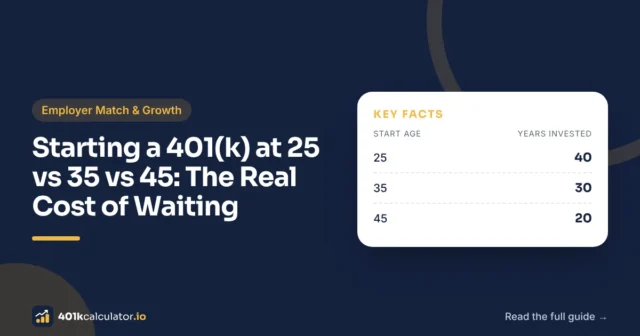
Starting a 401(k) at 25 vs 35 vs 45: The Real Cost of Waiting
Time is the one input you can’t add later. Here’s what $500 a month, earning 7% a year (compounded monthly), grows to…
Time is the one input you can’t add later. Here’s what $500 a month, earning 7% a year (compounded monthly), grows to…
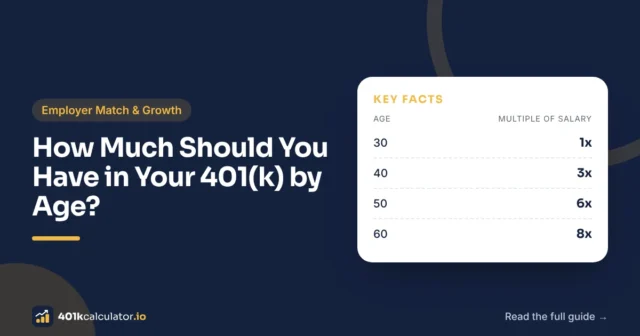
A widely used guideline from Fidelity Investments suggests saving 1x your salary by 30, 3x by 40, 6x by 50, 8x by…
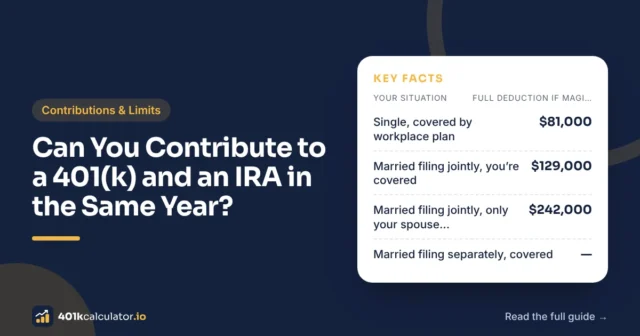
Yes. The limits are separate. In 2026 you can contribute up to $24,500 to a 401(k) and up to $7,500 to IRAs…
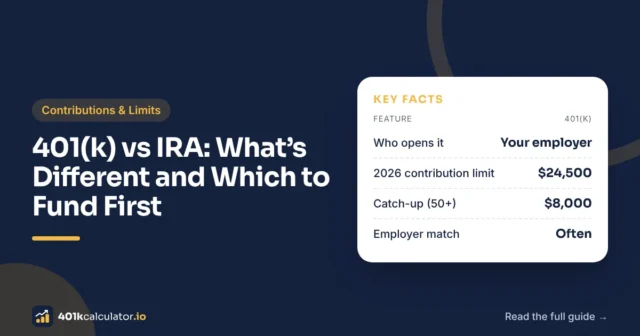
A 401(k) is offered by your employer and funded from your paycheck. An IRA (individual retirement account) is one you open yourself…
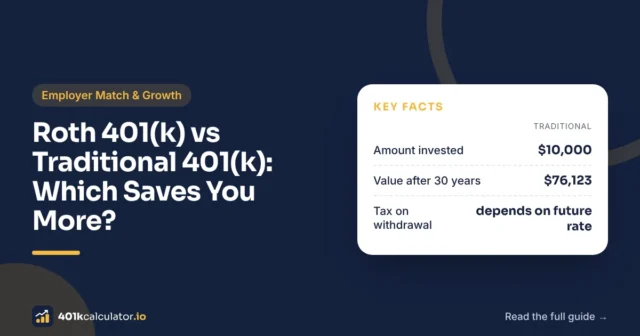
The difference is when you pay income tax: Traditional 401(k): contributions reduce your taxable income now. Withdrawals are taxed later. Roth 401(k):…
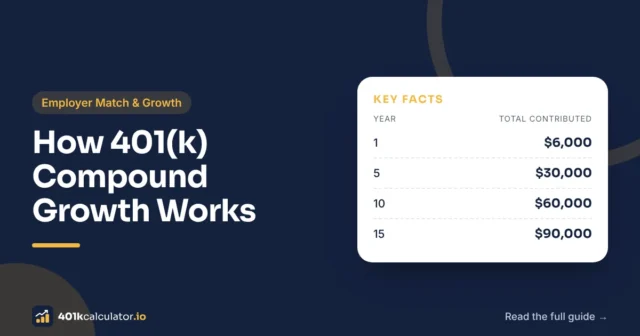
Compound growth means your investment returns start earning returns of their own. In a 401(k), this happens without yearly taxes on gains,…
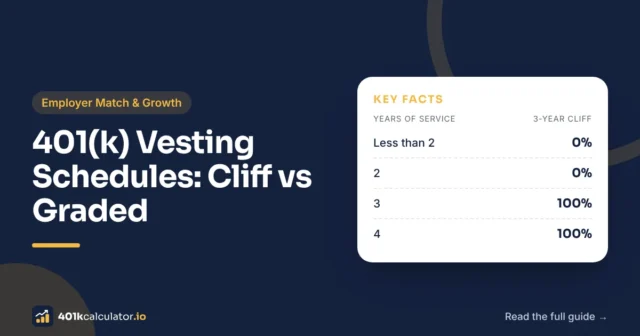
“Vesting” decides how much of your employer’s contributions you keep if you leave your job. Your own contributions are always 100% vested.…
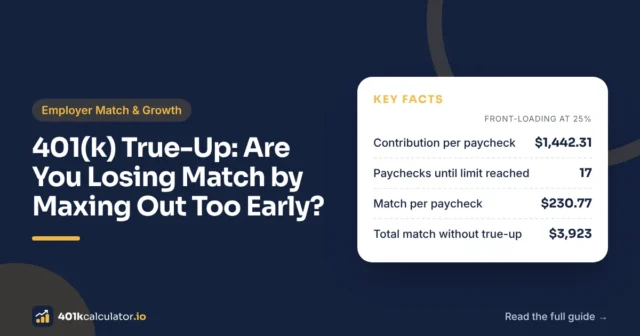
If your employer matches each paycheck, reaching the $24,500 limit early in the year can stop your match for the rest of…
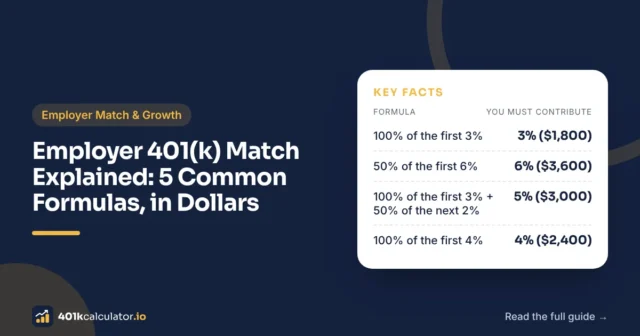
An employer match is money your company adds to your 401(k) when you contribute. The formula tells you how much they add…
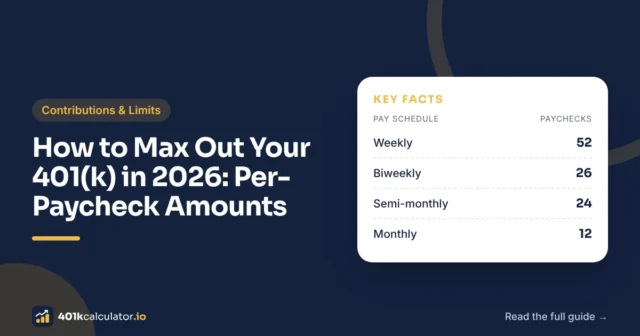
To max out your 401(k) in 2026, you need to contribute $24,500 over the year, or more if you are 50 or…